Investigating a hybrid mixed population leads to recognizing a new species of Arctostaphylos (Ericaceae)
While investigating the potential for Arctostaphylos species to hybridize in the mixed populations of Point Sal and Burton Mesa in Santa Barbara County, California, we discovered that Arctostaphylos from the Nipomo Mesa (San Luis Obispo County), formerly considered a northern population of A. rudis, are genetically and morphologically distinct. We name this new taxon A. nipumu after the ytt (Northern Chumash language) word for the Nipomo Mesa region. For morphological and molecular analyses, we sampled 54 plants, focusing on A. purissima, A. rudis, and A. crustacea from multiple species and comparative single species populations. Parametric and nonparametric clustering analyses (STRUCTURE and PCA) of ddRADseq data show that Arctostaphylos from the Nipomo Mesa segregate from all other samples in the dataset. In mixed populations A. purissima and A. crustacea samples cluster with samples from other unmixed populations of the same species but A. rudis samples form two distinct clusters. One is composed of the mixed populations in Santa Barbara County, and the other consists of the Nipomo Mesa population. Additionally, the Santa Barbara County A. rudis samples are admixed in STRUCTURE analysis unlike the samples from the Nipomo Mesa. A principal component analysis of eight morphological characters shows that A. rudis individuals from Santa Barbara County tend to be phenotypically variable, occurring in a wide morphological cluster that overlaps with the tight clusters formed by A. purissima, A. crustacea, and Arctostaphylos from the Nipomo Mesa. Based on this evidence we describe the Nipomo Mesa population as a new species of Arctostaphylos. Given its limited and fragmented distribution we believe that A. nipumu is of critical conservation concern.
Solving the Enigma of an Extralimital Suwannee Alligator Snapping Turtle (Macrochelys suwanniensis) Population in the Homosassa River, Florida
We conducted a study to determine the origin and provenance of Macrochelys sp. (alligator snapping turtles) in the Homosassa River >70 km from the nearest known population. In 2023‒2024, we captured 14 males and 4 females in Pepper Creek, a Homosassa tributary. Genetic analyses of 16 turtles determined they were M. suwanniensis (Suwannee Alligator Snapping Turtle) that originated from near the confluence of the Santa Fe and Suwannee rivers, and they were parent–offspring or siblings. The population apparently resulted from 4 turtles escaping from a tourist attraction >40 years ago. Based on our capture–recapture model, there are ~33 (min–max = 22–55) individuals in Pepper Creek. Additional research is needed to better understand the health and conservation status of this population.
Phylogenetics, subspecies, and conservation of the eastern pinesnake
Whether or where to draw subspecies’ taxonomic boundaries is much more than an esoteric argument. Subspecific taxonomies and associated geographic ranges have important conservation and management implications because the Endangered Species Act (ESA) protects distinct populations segments below the species level. Genomic data can help resolve taxonomic disputes and assist with conservation policy; however, because subspecific lineages often exhibit gene flow, genomic lineages for subspecific taxa are rarely distinct. We used genomic data from the eastern pinesnake (Pituophis melanoleucus) to determine the geographic range of the morphologically variable Florida pinesnake (P. m. mugitus), which is petitioned for listing under the ESA. The overall genomic pattern of the eastern pinesnake is one of admixture, and there are gradual differences over the wide range of the species. But there still are discernable areas of genetic differentiation that correspond to the morphologically defined Florida pinesnake, and other subspecies. This pattern of admixture should be expected for subspecies. We propose that boundaries for the Florida pinesnake should maximize the species redundancy, resilience, and representation based on genomic data. We also propose best practices for managers and policymakers interpreting genomic data of subspecies, given that the genomic cutoffs will rarely be truly distinct.

Widespread amphibians are often assumed to be demographically resilient, yet increasing habitat modification and intensive harvesting may erode genetic connectivity. In Nigeria, edible frogs such as the crowned bullfrog (Hoplobatrachus occipitalis) are subject to intense and largely unregulated exploitation, despite limited information on population demography, genetic diversity, or population connectivity. Here, we combine mitochondrial and genomic data to evaluate patterns of genetic structure and gene flow in H. occipitalis across Southwestern Nigeria and within a broader African biogeographic framework. Mitochondrial haplotype analyses revealed a dominant, widely distributed haplotype shared across West, Central, and East Africa, consistent with a recent late-Quaternary expansion and weak phylogeographic structure. Analyses based on genome-wide nuclear SNP data showed weak but detectable habitat-associated structuring among savanna, rainforest, and mangrove populations. Nigerian populations exhibited moderate and relatively homogeneous nucleotide diversity (π = 0.0006–0.0015). Pairwise genetic differentiation was low overall, with the highest differentiation observed between Derived Savanna and Guinea Savanna populations (FST = 0.021). Effective migration surface analyses identified localized reductions in gene flow, particularly near urban and coastal centers, indicating that anthropogenic modification may constrain connectivity at fine spatial scales. These results demonstrate that H. occipitalis remains genetically cohesive at regional scales, yet locally vulnerable to habitat fragmentation, urbanization, and exploitation. These findings highlight the importance of maintaining breeding habitat connectivity and regulating harvest in rapidly developing landscapes to preserve genetic diversity in widespread amphibians.
Using genomic data to estimate population structure of Gopher Tortoise (Gopherus polyphemus) populations in Southern Alabama
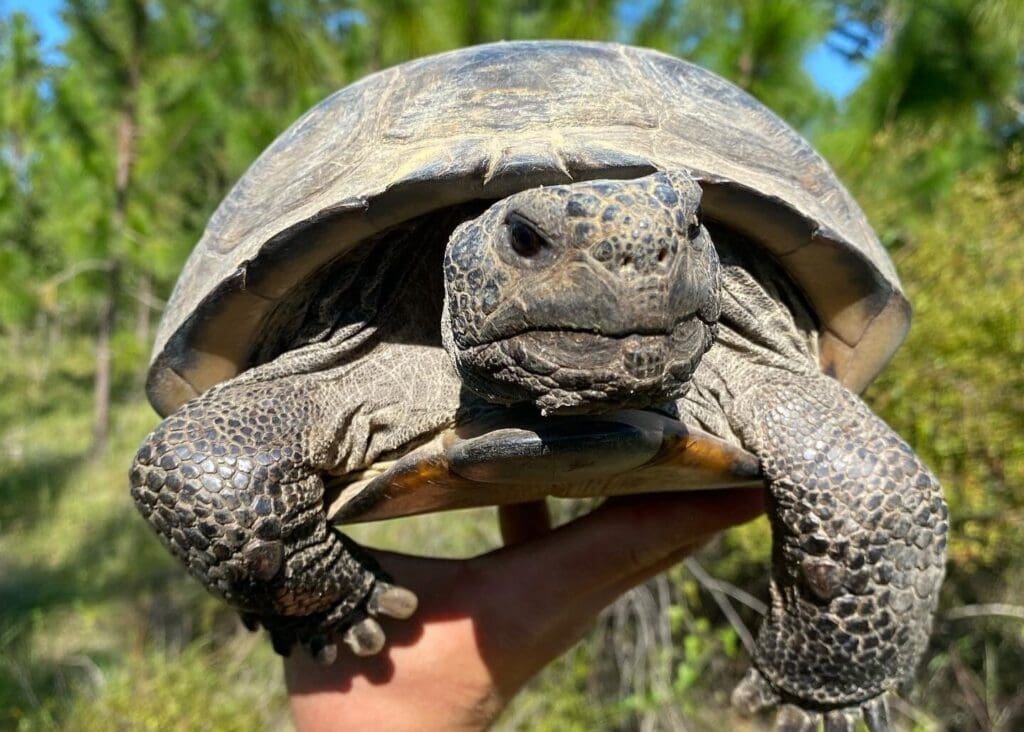
In the North American longleaf pine (Pinus palustris) ecosystem, the Gopher Tortoise (Gopherus polyphemus) is a keystone species that has declined significantly over the last century. Habitat degradation and fragmentation may have caused G. polyphemus to become separated into small, isolated local populations that suffer from decreased genetic diversity or inbreeding depression. Here we use genome-scale methods to sequence thousands of loci for 336 G. polyphemus individuals from 11 sites across southern Alabama to estimate population genetic structure and levels of genetic diversity. We found a pattern of isolation by distance among samples, where geographic distance predicted genetic difference. Principal components and structure analyses supported the existence of three weak genetic populations comprising individuals from (1) Fred T. Stimpson State Game Sanctuary and Perdido Wildlife Management Area, (2) Conecuh National Forest and Solon Dixon Forestry Education Center, and (3) Geneva State Forest Wildlife Management Area. We did not observe strong variation in genetic diversity or effective population size metrics among sampling locations or genetic populations identified by population structure analyses. Our results suggest that G. polyphemus historically operated on larger geographic scales than those considered by contemporary mark-recapture studies. Absence of variation in population genetic metrics suggests that either effects of fragmentation have not manifested themselves, or that the effects are similar across all locations. Given the common use of translocations in Gopher Tortoise management, we provide a framework for tortoise translocations based on our genomic data.
Population Structure and Genetic Differentiation in Extant Alligator Snapping Turtles (genus Macrochelys) with Implications for Taxonomy and Conservation
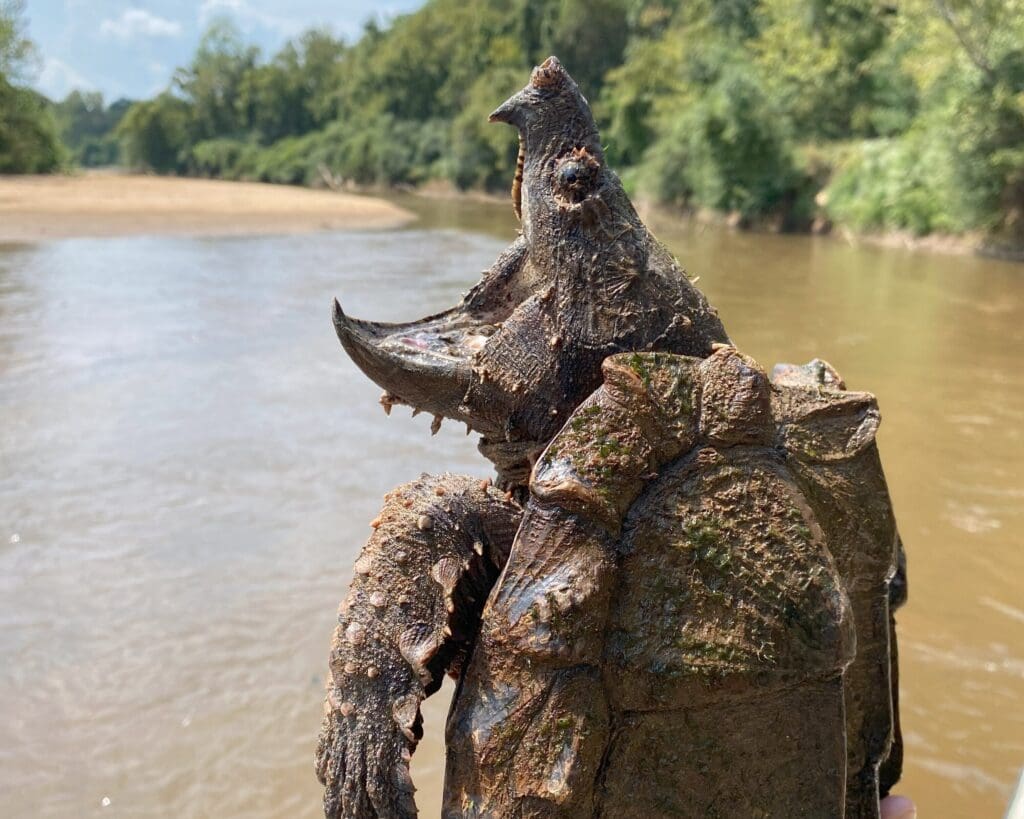
Historically believed to harbor unrecognized diversity, the taxonomy of the declining genus Macrochelys (alligator snapping turtles) is debated. The original species, M. temminckii, was recently split into M. temminckii, M. apalachicolae, and M. suwanniensis. However, the status of M. apalachicolae is contested. In this study, we generated thousands of genome-wide loci to quantify population structure and genetic differentiation across the range of Macrochelys spp. Our data indicate that M. apalachicolae is genetically distinct, with little gene flow between M. apalachicolae and other species, thus adding evidence that M. apalachicolae may be a distinct species. We also find genetic variation partitioned among river drainages, with very high intra- and interspecific genetic divergence among river drainages. We suggest that translocations and re-introductions only move turtles in this genus within their natal river drainages to preserve existing patterns of genetic diversity.
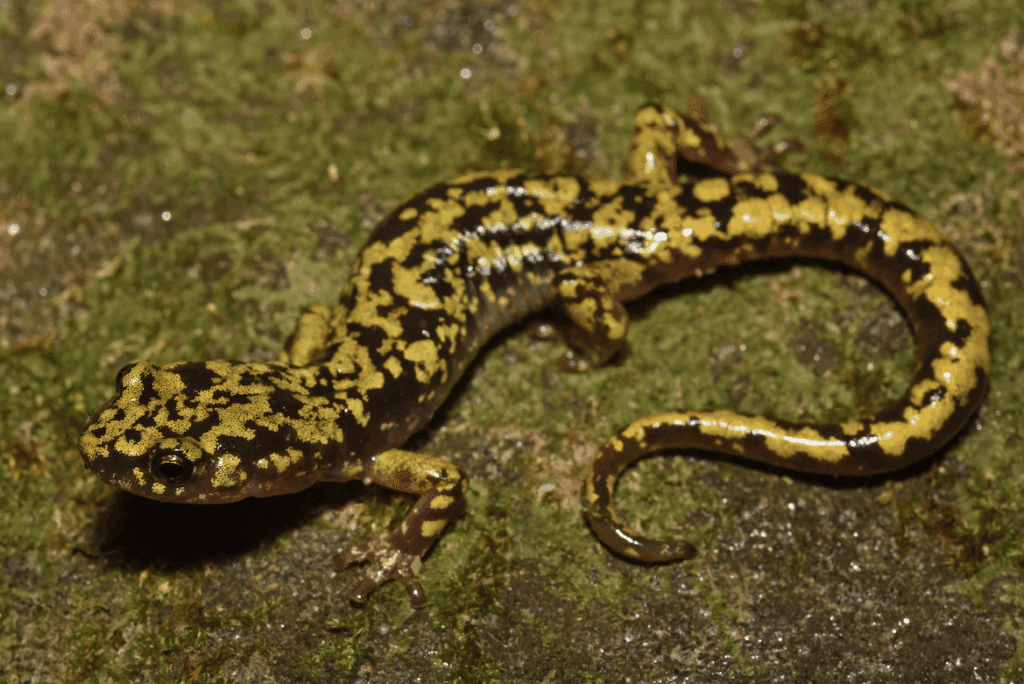
Mitochondrial DNA and Population Genomics Reveal Additional Cryptic Diversity in the Green Salamander (Subgenus Castaneides) Species Complex